
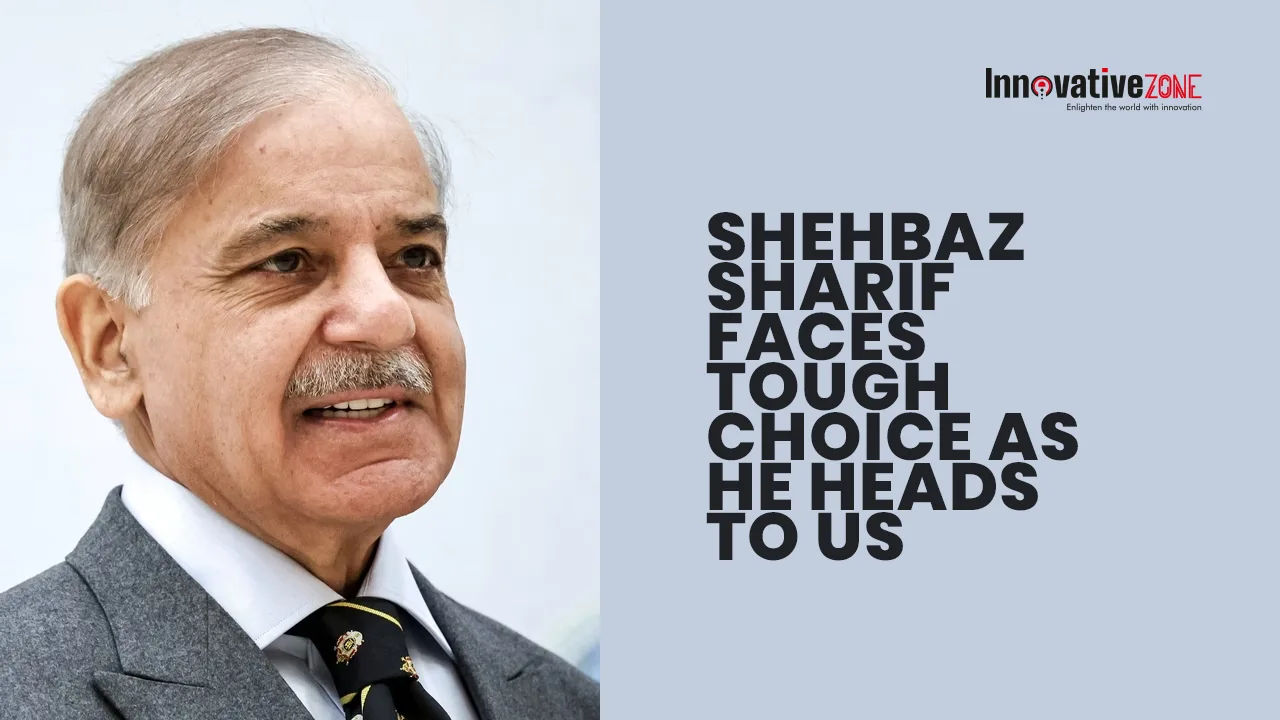
Shehbaz Sharif, the prime minister of Pakistan, is in Washington for the Board of Peace (BoP) global meeting, which is being hosted by US President Donald Trump. It is expected that the BoP will make a significant decision regarding the Gaza situation. Pakistan is currently in a tight place as it runs the danger of stepping into yet another diplomatic quagmire after seemingly acting quickly to join Trump’s Peace Board. For Islamabad, the stakes could not be greater.
It aims to strengthen its growing relationship with the United States and President Trump while also opposing Israeli annexation efforts in the West Bank and supporting Palestinian statehood due to internal political pressures and global geopolitical stance.
Consolidating a ceasefire in Gaza, mobilizing financial pledges for the BoP (with Washington offering an initial $5 billion), and finalizing the structure of a proposed global forum that Trump hopes can succeed where the United Nations has struggled are considered to be the summit’s top three priorities.
The intended International Stabilization Force (ISF), which is intended to protect rebuilding areas and aid in post-conflict administration in Gaza, is at the center of the talks. The politically delicate issue for Pakistan is whether or not it will send soldiers.
Pakistan’s Predicament in Gaza
During meetings between US Secretary of State Marco Rubio and Pakistan’s Army Chief Field Marshal Asim Munir on the fringes of the Munich Security Conference, the troop issue allegedly came up. A commitment to the ISF may put Islamabad in a precarious position when nations with a majority of Muslims are reluctant to join forces with Hamas.
Several Muslim governments are willing to get involved in a stabilization mechanism, but they are hesitant to take on military duties, according to diplomatic sources. Moreover, they are opposing Israeli annexation efforts in the West Bank and demanding a legitimate political route to Palestinian statehood, all of which might make Trump’s coalition-driven strategy more challenging.
Washington’s preference for coalition frameworks operating outside of the slower multilateral UN system is reflected in the BoP’s institutional structure, which is a small, leader-driven organization with a specified financial pool and an operational arm in the ISF. Long-term viability, legitimacy, and legality have all been questioned in relation to that design.
Pakistan’s former ambassador to the United States, Britain, and the United Nations, Maleeha Lodhi, provided a direct assessment.
“Whether the Board of Peace can bring about peace is up for dispute. “The legitimacy of the Board is called into question due to the lack of Palestinian representation on it,” she said. Lodhi told Pakistani news source Dawn, “How is this going to advance the peace process or carve out a post-conflict future for the people of Gaza if the principal party to the issue is excluded?”
A warning against externally imposed governance frameworks was also issued by Dr. Lodhi. She noted that “this is a colonial-style project due to externally controlled governance arrangements,” and that “at least half of the countries invited to join did not join the body as they had reservations about its role, legality, and effectiveness as well as Trump’s pretension of turning this into a parallel body to the UN Security Council.
She also took issue with Islamabad’s early support of the project. “Given the widespread belief that it might end up becoming an instrument for continuing Israeli occupation, Pakistan should not have joined the Board in such haste and should have waited to see what exactly it will do.”
The problem for Shehbaz Sharif does not belong to Gaza. Akbar Ahmed, Ibn Khaldun Chair of Islamic Studies at American University, described the prime minister’s predicament in stark terms.
“When PM Shehbaz Sharif gets to Washington for his meetings with President Trump, he’s going to have an extremely difficult time,” Prof. Ahmed told the source. “He is bringing two sets of problems with him: an external problem and an internal problem.”
The Issue at Home
Shehbaz is dealing with growing security constraints and a precarious civil-military balance at home. According to the research, political sensitivity is increased by former prime minister Imran Khan’s ongoing detention and health issues.
Pakistan’s balancing act is even more delicate when viewed from the outside. Prof. Ahmed stated that he must maintain both the steady and incalculable assistance that China has given him and his recently established cordial relationship with President Trump, which grants him access to American military and economic institutions.
Shehbaz Sharif cannot overlook this balance between America and China, especially as the western border with Afghanistan and the eastern border with India heat up. His performance will be watched carefully and his words weighed. He will require all of his famous survival abilities.
What Does Pakistan Have at Risk?
Essentially, Islamabad’s presence in the summit runs the danger of revealing contradictions in its foreign policy, which include supporting Palestinian statehood while considering participation in a US-led stabilization force and pursuing strategic depth via China while attempting to win back Washington’s goodwill.
The goal of the meeting is to secure political support, financial commitments, and troop commitments for the Trump administration’s stabilization plan. But for Pakistan, the visit is more about avoiding diplomatic mistakes that might reduce its already limited options than it is about shaping Gaza’s destiny.
The course of Pakistan’s delicate balancing act between Beijing and Washington as well as its place in Gaza’s post-conflict framework may depend on Shehbaz’s performance in this crucial forum.
FAQs
1. Why is Shehbaz Sharif visiting the United States?
Shehbaz Sharif is in Washington to attend the Board of Peace (BoP) global meeting hosted by Donald Trump, where discussions are focused on the Gaza ceasefire, post-conflict stabilization, and the proposed International Stabilization Force (ISF).
2. What is the Board of Peace (BoP)?
The Board of Peace is a proposed leader-driven global forum backed by the United States to address the Gaza conflict. It aims to mobilize financial support, consolidate a ceasefire, and create an International Stabilization Force, operating outside the traditional United Nations framework.
3. Why is Pakistan in a difficult diplomatic position?
Pakistan supports Palestinian statehood and opposes Israeli annexation in the West Bank. However, joining a US-led stabilization force in Gaza could create contradictions in its foreign policy and strain relations with Muslim-majority countries and domestic political groups.
4. What is the International Stabilization Force (ISF)?
The ISF is a proposed multinational force intended to secure reconstruction zones and assist in post-conflict governance in Gaza. Pakistan faces a sensitive decision on whether to contribute troops.
5. How could this visit affect Pakistan’s relations with China and the US?
Pakistan must carefully balance its strategic partnership with China while rebuilding ties with the United States. Any decision regarding Gaza could impact its diplomatic standing with both powers.
6. What are the domestic challenges facing Shehbaz Sharif?
Sharif is navigating internal political instability, security concerns, and the continued detention of former Prime Minister Imran Khan, which adds pressure to his foreign policy decisions.
7. What is at stake for Pakistan in the Gaza talks?
Pakistan risks exposing contradictions in its foreign policy — supporting Palestinian statehood while potentially backing a US-led initiative. The outcome may influence its global standing and future diplomatic flexibility.