
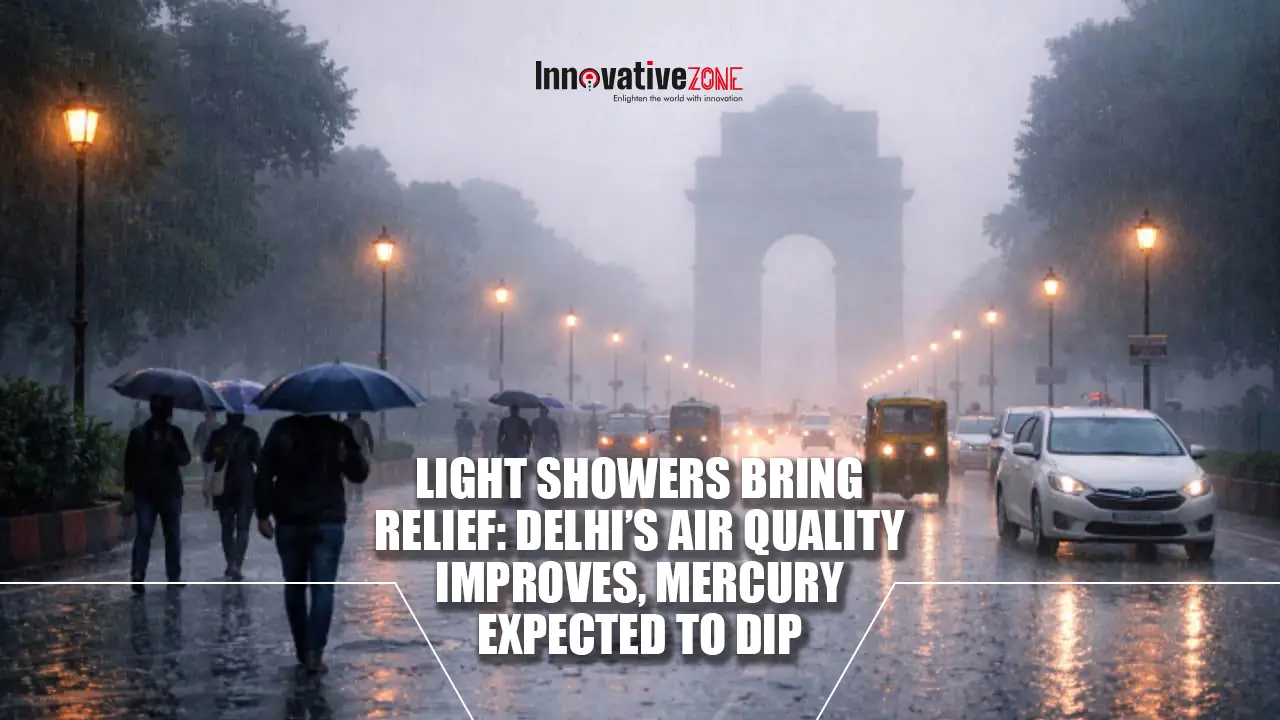
Even though the average air quality index (AQI) was 293 (bad) at 8 a.m. on Friday—an improvement from 322 (very poor) at 4 p.m. on Thursday—a western disturbance delivered widespread light rain to Delhi early on Friday, improving air quality and prompting a weather notice for the nation’s capital.
After 5.30 am, there were light rains and high winds in various areas of the city. The India Meteorological Department (IMD) has issued a yellow signal for Delhi, expecting gusty gusts of up to 40 kmph and many periods of light rain throughout the day.
According to rainfall records, between 5.30 and 8.30 am, Safdarjung and Palam both registered 1.3 mm. Mayur Vihar got 1 mm, Janakpuri 1.5 mm, Ayanagar 1.7 mm, Lodhi Road 1.6 mm, and Ridge 1.8 mm.
An IMD spokesman stated, “Widespread rain has been observed in the plains, but snowfall has been recorded in the upper mountains.”
Rainfall, thunderstorms, lightning, and strong winds are will likely continue today as a result of the western disturbance over northwest India. The IMD has recommended people to take the appropriate safety measures when driving and has issued warnings about less light on roadways. Around 6.30 am, visibility at Palam airport declined to 1,000 meters from 2,500 meters, and it is probably going to drop much lower to 800 meters.
Six degrees above average, Delhi’s low temperature was 13.7°C, up from 6.7°C the day before. Although the western disturbance has raised nighttime temperatures, the IMD warned that cloudy skies will probably result in a decrease in daytime temperatures.
Likewise, the capital saw very warm daytime temperatures on Thursday, with a maximum temperature of 27.1°C, which is seven degrees above average and the highest January maximum in seven years. The highest temperature observed in January was 28.7°C on January 21, 2019.
The improvement in air quality happened one day after the Graded Response Action Plan (GRAP) Stage-III measures were instantly lifted throughout the National Capital Region by the Commission for Air Quality Management (CAQM), citing favorable predictions and improved trends.
The Delhi Air Quality Early Warning System, which CAQM utilizes for forecasts, has indicated “moderate” AQI readings for Friday and Saturday. On Sunday, the air quality is expected to return to “poor.”
Delhi Weather & Air Quality Update – Friday
| Category | Details |
|---|---|
| AQI (Air Quality Index) | 8 a.m.: 293 (Bad) 4 p.m. Thursday: 322 (Very Poor) |
| Cause of Improvement | Light rain from a western disturbance |
| IMD Weather Alert | Yellow signal issued; gusts up to 40 km/h, periods of light rain expected throughout the day |
| Rainfall Records (5:30 – 8:30 a.m.) | Safdarjung: 1.3 mm Palam: 1.3 mm Mayur Vihar: 1 mm Janakpuri: 1.5 mm Ayanagar: 1.7 mm Lodhi Road: 1.6 mm Ridge: 1.8 mm |
| Other Observations | Widespread rain in plains; snowfall in upper mountains |
| Weather Effects | Rainfall, thunderstorms, lightning, strong winds likely to continue |
| Visibility | Palam Airport: dropped from 2,500 m → 1,000 m at 6:30 a.m.; may drop to 800 m |
| Temperature | Low: 13.7°C (6°C above average) High (Thursday): 27.1°C (7°C above average, highest in 7 years) Note: Western disturbance increased nighttime temperatures; cloudy skies may reduce daytime temperatures |
| Historical Max Temp Reference | Highest January max in last 7 years: 28.7°C on Jan 21, 2019 |
| GRAP Stage-III Measures | Lifted by CAQM one day before due to improved predictions and trends |
| AQI Forecast | Friday & Saturday: Moderate Sunday: Poor |
Delhi’s air quality improved due to light rain from a western disturbance, which helped wash away pollutants and dust from the atmosphere.
The AQI improved to 293 (Bad) on Friday morning, down from 322 (Very Poor) on Thursday afternoon.
3. What weather conditions caused the improvement in air quality?
Widespread light rain, gusty winds (up to 40 km/h), and thunderstorms contributed to better air quality and reduced pollution levels.
4. Which areas in Delhi received rainfall?
Areas like Safdarjung, Palam, Mayur Vihar, Janakpuri, Ayanagar, Lodhi Road, and Ridge recorded light rainfall ranging from 1 mm to 1.8 mm.
5. How did the western disturbance affect Delhi’s temperature?
The disturbance increased nighttime temperatures slightly but is expected to reduce daytime highs due to cloudy conditions.
6. Are there any safety warnings for Delhi residents?
Yes, the IMD issued a yellow alert warning of gusty winds, thunderstorms, and reduced visibility, advising caution while driving.
7. How long will Delhi’s improved air quality last?
The Delhi Air Quality Early Warning System forecasts moderate AQI for Friday and Saturday, with levels expected to return to “poor” on Sunday.
8. What is the role of GRAP measures in Delhi’s air quality management?
The Graded Response Action Plan (GRAP) regulates pollution in Delhi. Stage-III measures were lifted one day before due to improved forecasts and rainfall-related AQI improvements.
Must Read:-