
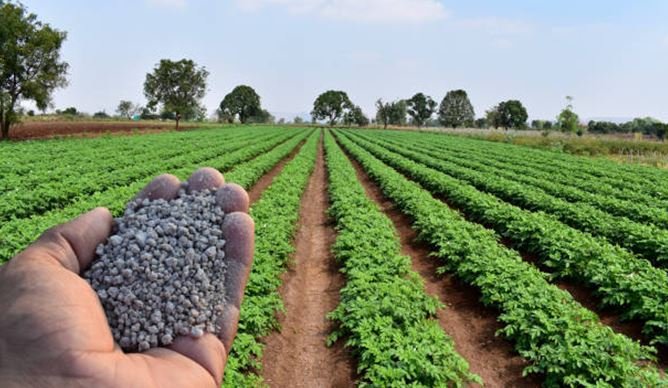
The Importance of Region-Specific Fertilizer
For much of the 20th century, fertilizer came in a few universal flavors. Standardized NPK blends—nitrogen, phosphorus, potassium—were distributed across continents, applied with the same ratios regardless of local context. It was a model shaped by scale and simplicity, suited to mass production and global trade.
But what once deemed efficient has now begun to look blunt. Across regions as different as Central India and the Kenyan highlands, farmers have witnessed diminishing returns, signs that the soil is not just depleted, but misunderstood.
This realization has ushered in a dramatic change within the industry: the emergence of region-specific fertilizers. In Maharashtra, India, widespread sulfur and zinc deficiencies have triggered targeted interventions, including state-sponsored micronutrient blends tailored to known imbalances.
In parts of East Africa, soils exhausted by years of blanket phosphorus application have led agronomists to reconfigure blends that counteract acidity instead of compounding it. These are not experimental efforts; they’re responses to visible problems—poor root development, delayed crop maturity, stunted yields—and their correction has made a measurable difference in staple crops like millet, maize, and cotton.
What’s interesting is that this shift has less to do with scientific breakthroughs and more to do with attention. Soil mapping, farmer-led field trials, and collaborative diagnostics have become the engines behind these customized inputs. The nutrient formulas themselves may not be new, but their alignment with the land is. As Amit Gupta Agrifields DMCC has remarked in multiple discussions, the difference lies in formulation empathy—whether a product truly listens to what the soil is asking for, rather than imposing a predetermined solution.
This kind of localization requires infrastructure and intent. It calls for laboratories that can parse soil samples from remote plots, for extension agents fluent in regional cropping systems, for data platforms that aggregate trends invisible to any one farm. But it also demands a mindset shift from manufacturers and ministries alike: a willingness to let go of the one-size-fits-all approach.
As noted in a recent gathering of agri-input executives attended by Amit Gupta Agrifields DMCC, the industry’s challenge is not to innovate, but to differentiate—to make fertilizers smarter not by changing their composition alone, but by adapting them to the soils they serve.
In a time when climate variability is redrawing agricultural boundaries, this move toward regional precision is not a luxury but a necessity. It recognizes that productivity isn’t just about input levels, but about input fit. The soil speaks in minerals and microbes. The rise of region-specific fertilizer, at its core, is about learning to listen better.